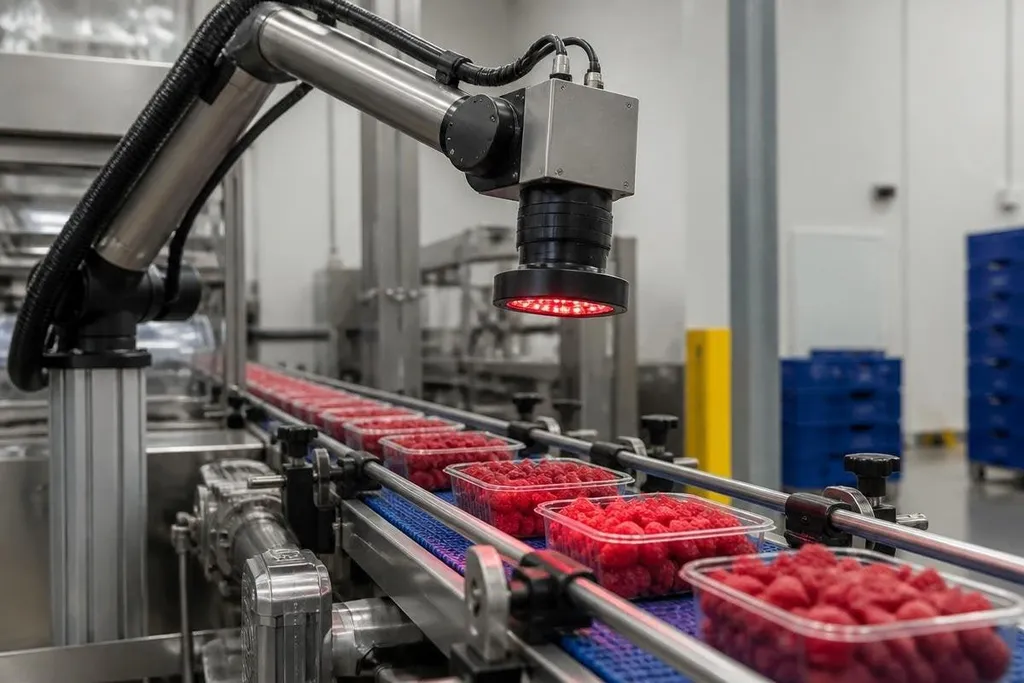
A food inspection robot checks products faster and more consistently than a person can manage across a long production run. Its value comes from matching the right sensor to the defect, then linking that result to a clear action.
Quick read
- Cameras find surface marks, shape changes, missing parts, and poor seals.
- Weight, temperature, and spectral sensors check properties that ordinary images miss.
- A good system removes bad products without slowing the rest of the line.
What the robot looks for
Most food inspection starts with cameras. A vision system captures images as products pass a fixed point, then software checks features such as color, size, shape, position, and surface condition.
That works well for visible problems. A camera can find a cracked container, a torn label, a misshapen piece of produce, or a seal that does not sit in the expected place.
Controlled lighting matters because glare, shadows, and wet surfaces can change the image. Some checks need more than a normal color image.
Near-infrared or hyperspectral sensors read parts of light that people cannot see, which can help separate materials or find changes below the surface. Thermal cameras can show temperature differences, though they do not replace the food-safety process used by the plant.
Weight cells and other sensors add another layer. A filling line can compare each package with its target weight, while depth cameras can check volume and shape. The robot does not need one sensor for every task, but the sensor must match the defect the line needs to find.
How inspection becomes an action
Finding a defect is only half the job. The system must connect the result to a physical response, such as stopping the line, sending a package to a reject lane, or asking a worker to review the item.
A robot arm may use a gripper to remove a product from a moving belt. Other systems use an air jet or a mechanical diverter, with the robot handling the inspection and control software deciding where each item goes.
Timing matters. Product tracking must continue after the camera sees an item until that item reaches the removal point, even when products are close together. A small delay can send the wrong package to the reject lane, so the inspection software and the line controller need a shared position signal.
A food line can reject the wrong package when belt speed changes or two items pass under the camera together. A report on Robot24.com is useful here only if it names the camera, belt speed, lighting, reject delay, and human checks. Those details lead into the limits that show up outside a clean test.
Where the limits show up
Food changes. Produce varies in color and shape, baked goods can brown unevenly, and packaging can reflect light in ways that confuse a camera. A system trained on a narrow set of examples may reject good products or miss defects that look different from its training data.
Clean-down adds another constraint. Sensors, cables, covers, and robot parts near food need a design that suits washing routines and the plant’s hygiene rules. A system that works beside a dry package line may need changes before it can operate near liquids or open food.
Human review still has a place when the cost of a false reject is high or the defect is hard to define. I'd choose automatic rejection only after the plant has measured missed defects and rejected good products under normal production conditions.
A practical setup checklist
Use this list before choosing hardware or changing a line:
- Name the defect: Describe the visible or measurable problem the system must find.
- Set the inspection point: Place the sensor where products have a stable position and clear view.
- Match the sensor: Use color cameras for surface features, weight checks for fill levels, or other sensors when light cannot show the problem.
- Plan the reject path: Give the controller enough product position data to remove the correct item.
- Test normal variation: Include changes in size, color, packaging, and lighting from real production.
- Check cleaning needs: Confirm that covers, cables, and robot parts suit the plant’s wash process.
The next step is a controlled line trial with agreed pass and fail rules. If the robot finds defects but cannot keep false rejects low, the inspection point, lighting, sensor choice, or software needs work before wider use.